With Patience and Good Will: The Art of the Arapaho
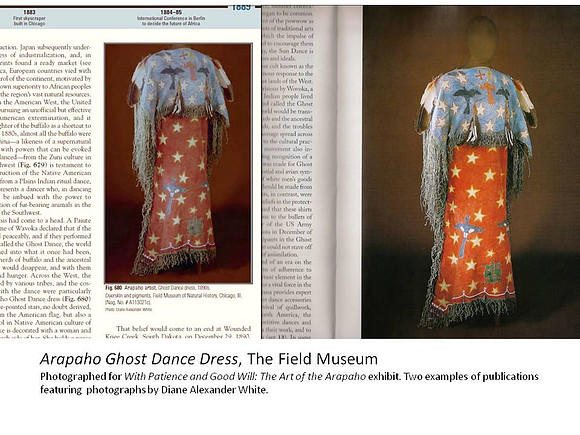
The exhibit called With Patience and Good Will: TheArt of the Arapaho (Field Museum, 1996) was a culturally significant photographic and collections‑based exhibition created to illuminate the artistry, symbolism, and lived traditions of the Arapaho people. The exhibit was organized by Dr. Jonathan Haas and Bob Spoonhunter who was the cultural advisor from the Wind River Reservation, Wyoming and was photographed by Diane Alexander White. Core Identity of the Exhibit With Patience and Good Will: TheArt of the Arapaho presented a curated selection of Arapaho cultural objects—textiles, beadwork, ceremonial items, tools, and everyday materials—highlighting the tribe’s deep artistic traditions and spiritual worldview. The exhibit emphasized how Arapaho craftsmanship is inseparable from cosmology, survival, and identity. Themes and Cultural Significance
Arapaho craftsmanship — The exhibit foregrounded beadwork, quillwork, and painted rawhide, each carrying symbolic meaning tied to animals, landscape, and spiritual forces. Arapaho artistry is historically intertwined with buffalo hunting culture, mobility, and ceremonial life.
Plants and animals — Many objects reflected the tribe’s relationship with the natural world, including materials sourced from buffalo, elk, porcupine, and native plants. These elements are central to Arapaho identity and appear throughout their decorative and ceremonial arts.
Survival traditions — Tools, clothing, and food‑related implements demonstrated how artistry and practicality merge in Arapaho daily life. Items made from bone, hide, rawhide, and plant fibers illustrated the tribe’s resourcefulness and cultural continuity.
Historical Context The Field Museum has held Arapaho collections since the early 20th century, largely acquired by anthropologist George A. Dorsey, who collected extensively from the Wind River Reservation. These collections formed the foundation for later exhibitions—including The Art of the Arapaho—which aimed to reinterpret early museum collecting practices through a more respectful, culturally informed lens. Visitors encountered:
Ceremonial objects connected to the Sun Dance and other spiritual traditions
Beaded garments and accessories showcasing geometric and symbolic motifs
Painted parfleches (rawhide containers) with bold, abstract designs
Tools and domestic items revealing the artistry embedded in everyday life
Photographic documentation contextualizing the objects within Arapaho history and cultural landscapes
The exhibit balanced aesthetic appreciation with cultural education, emphasizing that Arapaho art is not merely decorative—it is a living expression of identity, spirituality, and community.